
Price is usually the first question people ask about replacing a missing tooth. It’s a fair one. The trouble is that the answer you find online is almost never the answer for your mouth, because an implant isn’t one flat item on a menu.
Here’s a plain look at what you’re actually paying for when you look into affordable dental implants in Orland Park, what makes one person’s treatment cost more than another’s, and how to compare two quotes that don’t look anything alike.
What you’re actually paying for
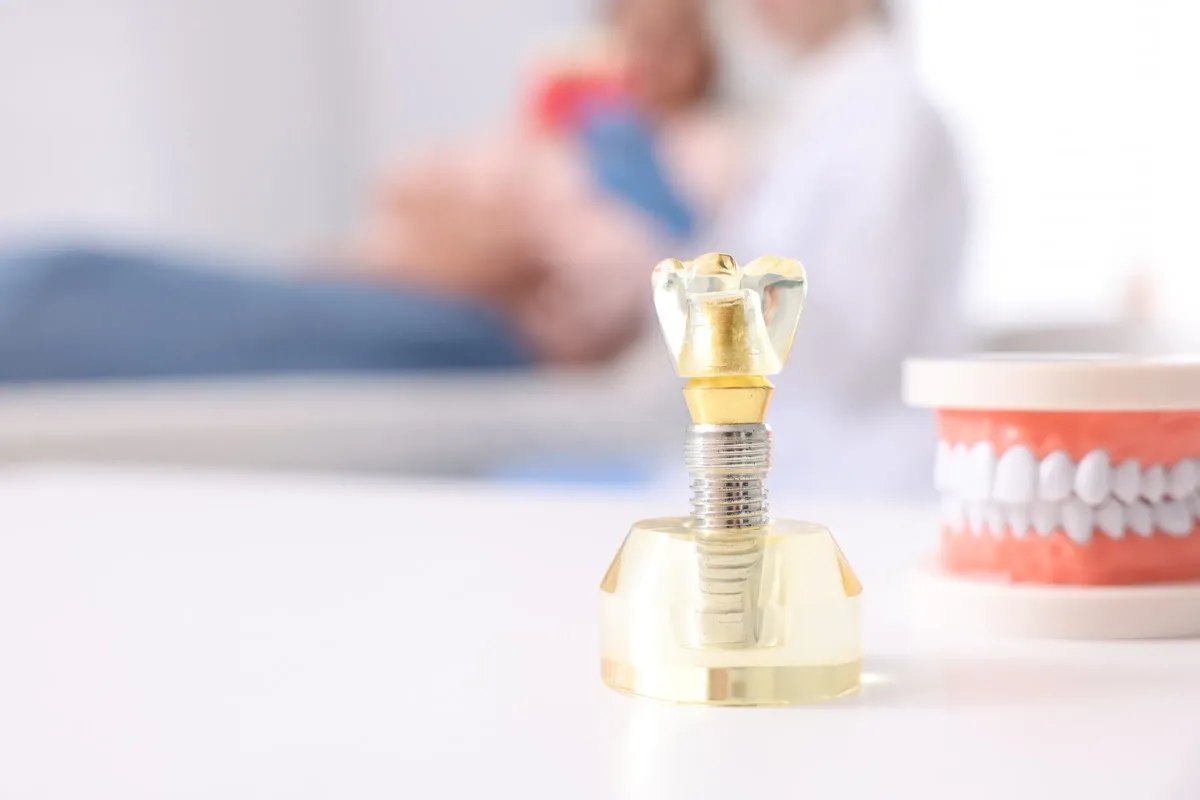
A dental implant is really three parts working together: the titanium post placed in the jawbone, the abutment that connects to it, and the crown you see and chew with. Each part has its own cost, and some quotes list them separately while others roll them into one number.
Then there’s everything around those parts. The exam and imaging that show where the bone is and where nerves and sinuses sit. The surgical visit itself. The lab work that shapes a crown to match your other teeth. Follow-up visits while the bone and the implant grow together. A quote that looks low sometimes covers only the post, with the crown billed later.
If you want the longer version of how treatment works and what shapes the investment, our page on affordable dental implants walks through it step by step.
Why two quotes can look so different
The biggest factor is what your jaw looks like today. Bone that’s been without a tooth root for years tends to shrink. If there isn’t enough bone to hold an implant securely, extra steps may be needed before or during placement, and those steps change the number.
Sometimes the bone loss is significant enough that regular implants aren’t an option at all. In those cases there are other approaches, like zygomatic implants that anchor in the cheekbone, which can avoid lengthy grafting. More complex planning means a different price than a straightforward single tooth.
Other things that move the number: whether a damaged tooth needs to come out first, whether you’re treating a front tooth where appearance matters most, the materials used for the crown, and the kind of imaging and planning involved. Our doctors use 3D imaging and digital planning, and that precision is part of what you’re paying for.
Then there’s who does the work. Dr. Agarwal is a prosthodontist, a specialist in implant surgery and the final restoration, and he’s joined by a second prosthodontist, a board-certified periodontist and an oral surgeon. A team of specialists under one roof handles complex cases differently than a general office that places the occasional implant.
Does replacing several teeth cost more per tooth?
Usually it’s the opposite. One implant and crown is priced on its own. But if you’re missing most or all of the teeth in an arch, you don’t need an implant for every single tooth. Full-arch treatment places a set number of implants that support a full bridge of new teeth.
That’s why people comparing the price of many single implants against All-on-4 full-arch teeth replacement are often surprised. The full-arch option replaces far more teeth for a number that isn’t many times higher. If you’re weighing four or five separate implants, it’s worth asking which approach actually fits your mouth and your budget.
The same math works the other way. Putting off one missing tooth can turn into a larger case later, because neighboring teeth drift and bone in the gap continues to shrink. A small problem rarely stays small in the mouth.
Comparing implants with the other options
A bridge or a denture usually costs less up front. That’s real, and for some people it’s the right call. But the comparison isn’t only about today’s number.
A bridge means reshaping the healthy teeth on either side of the gap. A removable denture rests on the gums and can loosen over time as the ridge underneath changes shape. Implants stand on their own and don’t require altering the teeth next door, and because the post sits in the bone, it keeps that area working.
If you’re sorting through the choices, our post on dental implants versus dentures lays out the trade-offs in everyday terms. Bring your questions about both when you come in. There’s no single right answer for everyone.
How to find affordable dental implants in Orland Park without guessing

Start with a real exam and real imaging. A number quoted over the phone, before anyone has looked at your bone, is a guess. A 3D scan shows what’s actually there, and that’s what turns a vague range into a figure you can plan around.
When you compare offices, ask what the quote includes. Does it cover the post, the abutment and the crown? Does it include the imaging? Are follow-up visits part of it? Two numbers can only be compared when they cover the same things.
Ask who’s doing each stage, too. Some offices place the implant in one building and send you elsewhere for the crown, which means two sets of fees and two sets of opinions. Here, placement and the final teeth are handled by the same team.
And ask about the rest of your mouth. If gum disease or a failing tooth is in the picture, that work shapes both the plan and the cost. Better to know early than to be surprised later.
What to ask at your first visit
Come with questions written down. The ones worth asking: how much bone do I have, what are my realistic options, what does each one include, and what happens if I wait a year?
New patients can take advantage of our FREE New Patient Exam & X-Rays, which covers a comprehensive oral exam (a $110 value), 3D X-ray as needed (a $450 value), digital X-rays as needed (a $150 value) and an oral cancer screening. That gives you and the doctor the same picture to talk from.
Our doctors are known for taking time to explain things and answer what you ask. You should leave understanding your mouth better than when you walked in, whatever you decide to do next.
The cost of waiting
Missing teeth don’t hold still. The bone in an empty spot gradually resorbs because nothing is stimulating it anymore. Nearby teeth tilt toward the gap. Chewing shifts to one side, and that side takes the extra load.
None of this happens overnight, and none of it means you should rush a decision. But the mouth you have today is usually the simplest, least expensive version of your mouth you’ll ever treat. Finding out where you stand costs you an appointment and some honest conversation.
Ready for a straight answer about your own teeth instead of a range you found online? Book a free consultation and let’s look at what’s really going on.